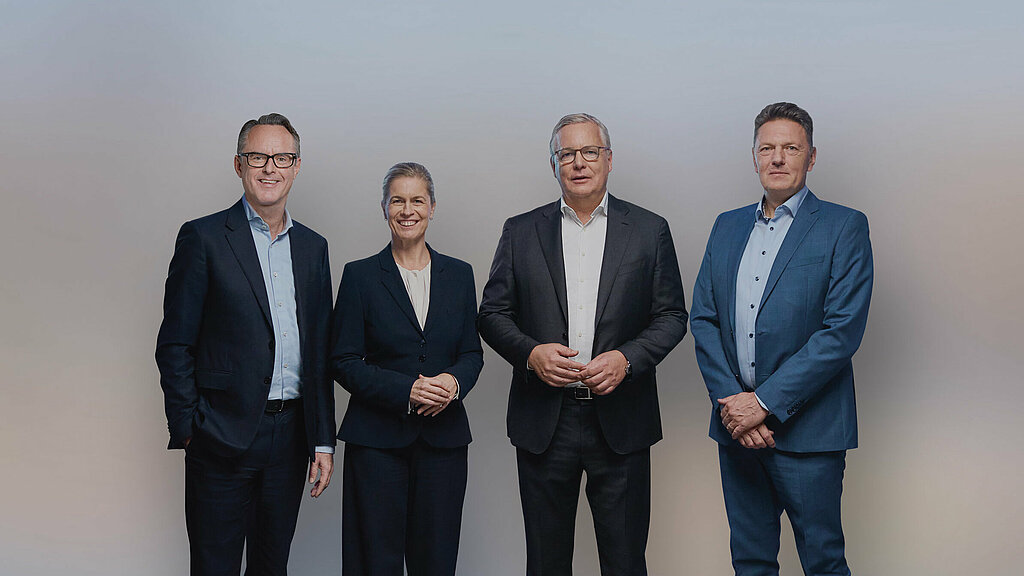
“The decade of metals has begun”

Aurubis Performance 2030. Forging resilience. Leading in multimetal. With its revised strategy, Aurubis is setting a course to capitalize on the opportunities presented by current megatrends. In an interview, the four Aurubis Executive Board members provide insights into the background, the challenges, and further growth options. They discuss innovations and the role of Aurubis in Europe and the US — and show how the company is actively shaping the future.
Toralf, looking back — how would you assess the past fiscal year?
Dr. Toralf Haag I’m proud of what we as a company — together with all employees — have achieved because we set our sights high. We are strengthening safety and plant security, clearly prioritizing our core business, leveraging efficiencies in the smelter network, and generating solid results within our forecast range in a dynamic market environment. At the same time, we’re realizing strategic projects on schedule and within budget and we’ve revised our multimetal strategy, tangibly reinforcing trust among our stakeholders at the end of the day.
And where do you see Aurubis in 2030?
Dr. Toralf Haag As a leading multimetal producer with a strong footprint in Europe and North America and a clear focus on responsible concentrate processing and recycling. We are dedicated to enhancing our position as a leading copper and multimetal producer by setting industry benchmarks in sustainable and efficient production. Many of our metals are technically and strategically crucial and contribute to important megatrends. We also have a unique selling proposition that emerges from clear competitive strengths — like our unique smelter network, integrated production, and resilient business model. We are showing that industry has a future in Europe.
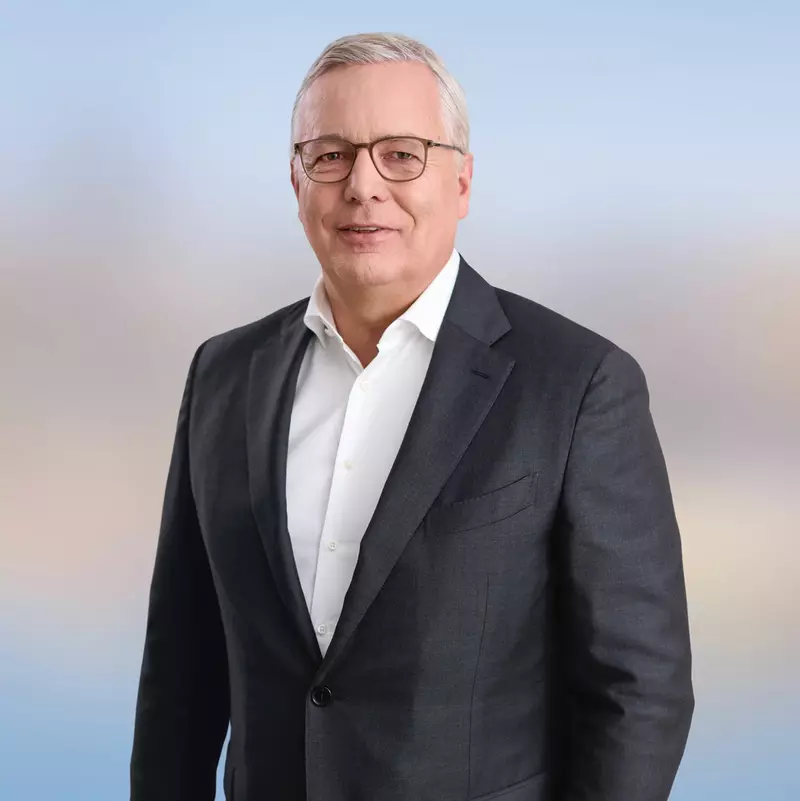
“We are dedicated to enhancing our position as a leading copper and multimetal producer. We’re showing that industry has a future in Europe.”
— Dr. Toralf Haag, CEO
What megatrends are driving demand for metals?
Dr. Toralf Haag Electrification, energy infrastructure, defense, artificial intelligence and data centers — all these require high volumes of copper and the other metals we produce. By 2035, more than 200,000 new wind turbines will have been built with up to 40 t of copper each, along with over 1,000 new hyperscale data centers with as much as 30,000 t of copper apiece for electricity and cooling. Rising defense spending worldwide will also flow into industries that rely on our metals. All told, in the next ten years market analysts anticipate a demand increase of around 26 % for gold, 40 % for tin, and 82 % for tellurium, to name just a few. Demand for the red metal, copper, is even expected to double by 2050. The decade of metals has begun. And we are perfectly positioned to meet it.
Where does Aurubis stand in bringing its current investment agenda to life?
Dr. Toralf Haag We’re well on track. We have already commissioned key strategic investment projects, and others will follow this fiscal year and next. We had already deployed more than 75 % of the around €1.7 billion planned for concrete projects by the end of September. With the revised strategy, ‘Aurubis Performance 2030. Forging resilience. Leading in multimetal.’, we will now reap the rewards and realize the returns. The focus is on developing both business areas — primary copper production and recycling. Our geographic focus remains on Europe and the United States, where our strong market presence allows us to actively shape and strengthen local value chains. We will generate an additional €260 million in EBITDA from the strategic projects each year starting in 2028/29.
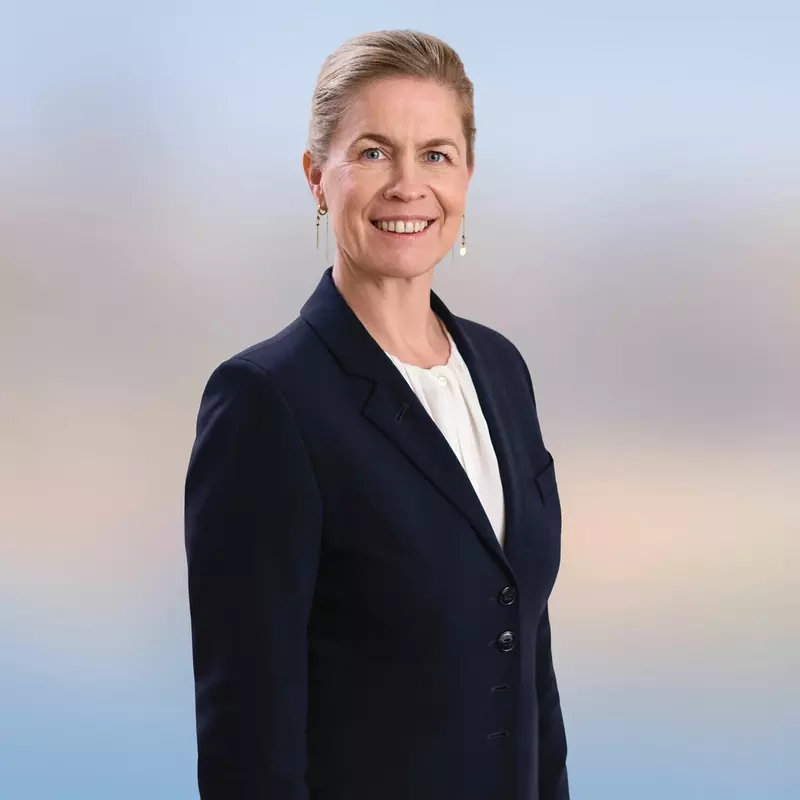
“We’re systematically developing all the sites in our smelter network with our multimetal strategy.”
— Inge Hofkens, COO Multimetal Recycling
Inge, what is the most important recycling project in your view?
Inge Hofkens Our multimetal strategy isn’t centered on just one project. We’re systematically developing all the sites in the smelter network, while also continuously optimizing material streams and investing in state-of-the-art technology, maximizing metal recovery. Our new site in the US stands out in terms of investment volume. We’ve built unique capacities with the first secondary smelter for complex recycling materials in the United States.
Is there potential for additional market growth in the US?
Inge Hofkens Absolutely. We are now in an ideal starting position to benefit even more from the attractive US market. The US needs about two million t of copper per year, half of which is imported. This means high dependence on foreign countries, especially on South America. Our new site in the United States is part of the solution for reducing this dependence.
What are the prospects for expanding recycling in Europe?
Inge Hofkens An innovative recycling plant will be commissioned in Hamburg in 2026. We’ll be able to process significantly more complex recycling materials with it — not just pure copper scrap but also electronic scrap and circuit boards that contain a variety of metals. We just opened a groundbreaking recycling plant in Beerse last year to recover more precious metals, lead and tin from complex anode slimes. And in late 2024, we commissioned a system to improve treatment of the electrolyte from the tankhouse at the Olen site — to recover more copper and nickel. So we’re significantly investing in the circular economy in Europe too.
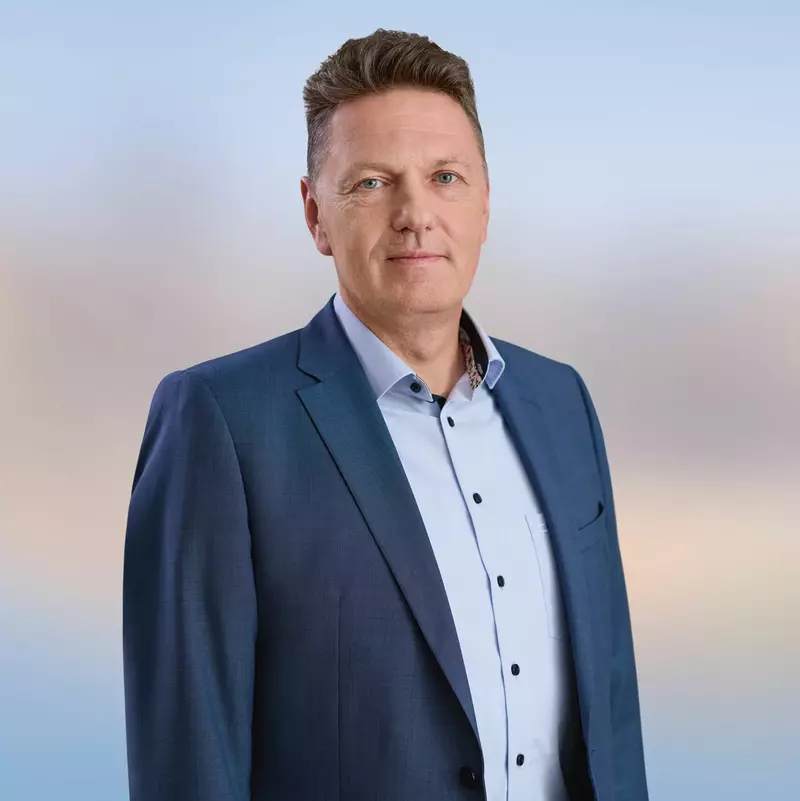
“Over nearly 160 years, we have developed unique capabilities for handling complex raw materials.”
— Tim Kurth, COO Custom Smelting & Products
Tim, what puts Aurubis ahead of the competition?
Tim Kurth Our competitive advantages include our expertise in recovering 20 metals and elements. Over nearly 160 years, we have developed unique capabilities for handling complex raw materials. Our ambition here is to achieve the highest recovery rates, enabling us to convert all input materials into marketable products. This also enables us to offer our customers exceptional product quality and supply security. At the same time, we’re making our production exceptionally environmentally sound: We have an especially low carbon footprint in our industry — for copper it’s more than 60 % below the global average of all copper smelters. This clearly sets us apart from the global competition.
What are you doing to make the core concentrate processing business fit for the future?
Tim Kurth We’re investing in plant facilities, processes and know-how. In Hamburg and Bulgaria, we carried out the largest scheduled maintenance shutdowns in our history last year and this year. The new anode furnaces in Hamburg, which are hydrogen-ready for the first time and built for the hydrogen age, are another example. We consistently eliminate bottlenecks in our production steps and use state-of-the-art technologies such as digital twins to optimize production control and planning. This helps us create the best conditions for high material throughputs and production stability.
Plant security is especially important for Aurubis. Where does Aurubis stand here today, and what will we see going forward?
Tim Kurth Along with work safety, this is one of our top priorities. We had no significant incidents in the past year, a clear sign of how effective the changes we’ve made are. We’ve more than doubled the number of cameras in Hamburg, increased security staffing levels, and intensified employee training. We also rely on drones with infrared cameras to secure the perimeter. And we invested in a state-of-the-art automated sampling system at our Hamburg site. These measures are now being rolled out to other sites.
What progress has Aurubis made when it comes to responsibility in the supply chain and sustainability?
Tim Kurth We invest extensively in decarbonization and environmental protection — more than €1 billion since 2000. Recycled content in our cathodes is high, around 45 %. And we’ve had nearly all our sites certified by the Copper Mark, the copper industry’s assurance framework based on the 33 internationally recognized sustainability criteria from the Responsible Minerals Initiative. We’re proud to champion responsible production. We clearly show our commitment to sustainability, creating trust among our stakeholders, securing demand in the long term, and making our products future-proof.
Steffen, Aurubis has halted further investment in battery recycling. Why?
Steffen Hoffmann It’s important for me to stress that our technology is excellent. The recovery rates for valuable battery metals like lithium are at about 95 %, a peak level in the industry. But the market is developing much more slowly than expected, with stark regional differences. So we have decided to concentrate our resources on our core business — processing primary and secondary materials and producing copper and other metals of the future.
Aurubis has a clear strategy and metal demand is strong — what is currently influencing next fiscal year’s forecast?
Steffen Hoffmann Demand for copper products is good and we’re seeing momentum in the copper premium and metal result. The situation for treatment charges is tighter and global concentrate availability will remain challenging since many new smelters have gone online in Asia. Nevertheless, we’ll continue benefiting from our long-term supply contracts with mine partners in the future. The same goes for our ability to process more complex material. Our business model’s various earnings drivers make us robust.
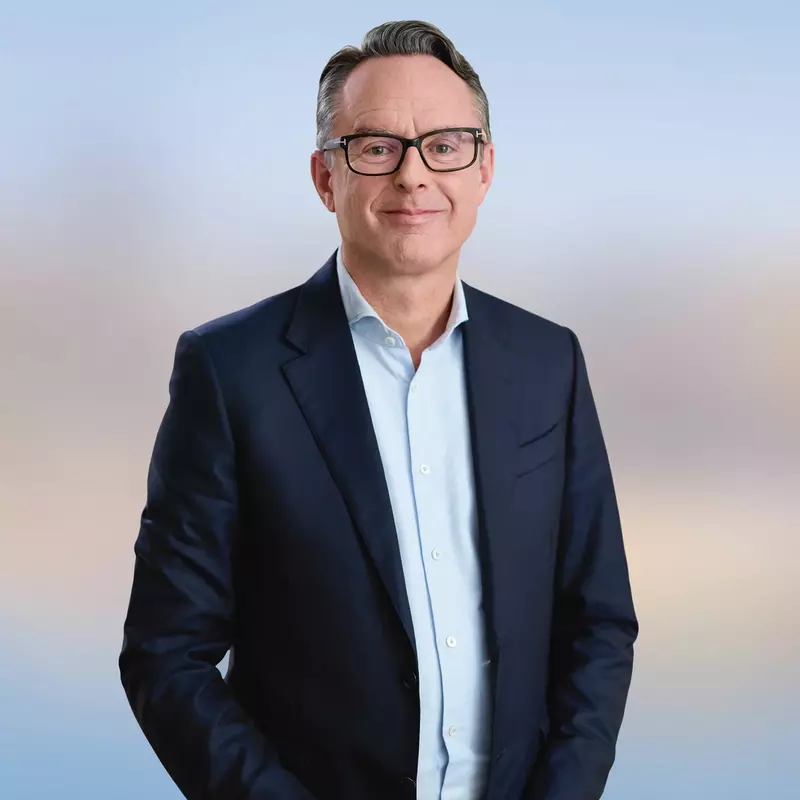
“We’re combining the dividend and focused growth to leverage our advantages and become an even more attractive company in 2030.”
— Steffen Hoffmann, CFO
How do you anticipate earnings will shape up in the fiscal year, concretely?
Steffen Hoffmann Taking all factors into consideration, we’re forecasting an earnings corridor between €300 and 400 million, on par with the good previous year’s level. We are also targeting positive free cash flow before the dividend again in fiscal year 2025/26.
What role do the dividend policy and financial leeway play in Aurubis’ future?
Steffen Hoffmann An important one. We want to continue growing in the future, if more strategically than before, and to allow our shareholders to participate in our success accordingly. For the 2025/26 fiscal year, our goal is a dividend payout amounting to 30 % of our adjusted consolidated earnings. We have a strong balance sheet with very low debt and a correspondingly high equity ratio of over 50 %, which opens the door on possible acquisitions — though that isn’t our focus right now. We’re combining the dividend and focused growth to leverage our advantages and become an even more attractive company in 2030.
For more information on the Aurubis Executive Board members’ CVs, please see here.